

DR. FITZ NUTRITION — NERVE HEALTH & METABOLIC SCIENCE
NERVE HEALTH · NUTRITION SCIENCE
The internet is full of lists. What most people actually need is the mechanism — the reason certain nutrients matter for nerve repair, and why the combination matters more than any single ingredient.
Michael Fitzmaurice, M.D.
Peripheral Nerve Surgeon & Metabolic Health Educator
"When I ask which vitamin repairs nerve damage, I hear the wrong question — what I really want to know is which nutritional pathways are failing, and how to support all of them at once."
I spent over a decade repairing damaged peripheral nerves surgically — carpal tunnel releases, nerve decompressions, reconstructive microsurgery. And what I observed repeatedly was this: the surgery itself was only part of the equation. Two patients, same procedure, vastly different recoveries. The differentiator was almost always metabolic and nutritional — how well-equipped the body was to finish the repair work that the surgery started.
That clinical observation led me to study the nutritional science of peripheral nerve repair in depth, and eventually to publish peer-reviewed research on my own formulation for surgical patients. What I learned changed how I think about "vitamins for nerve damage" entirely.
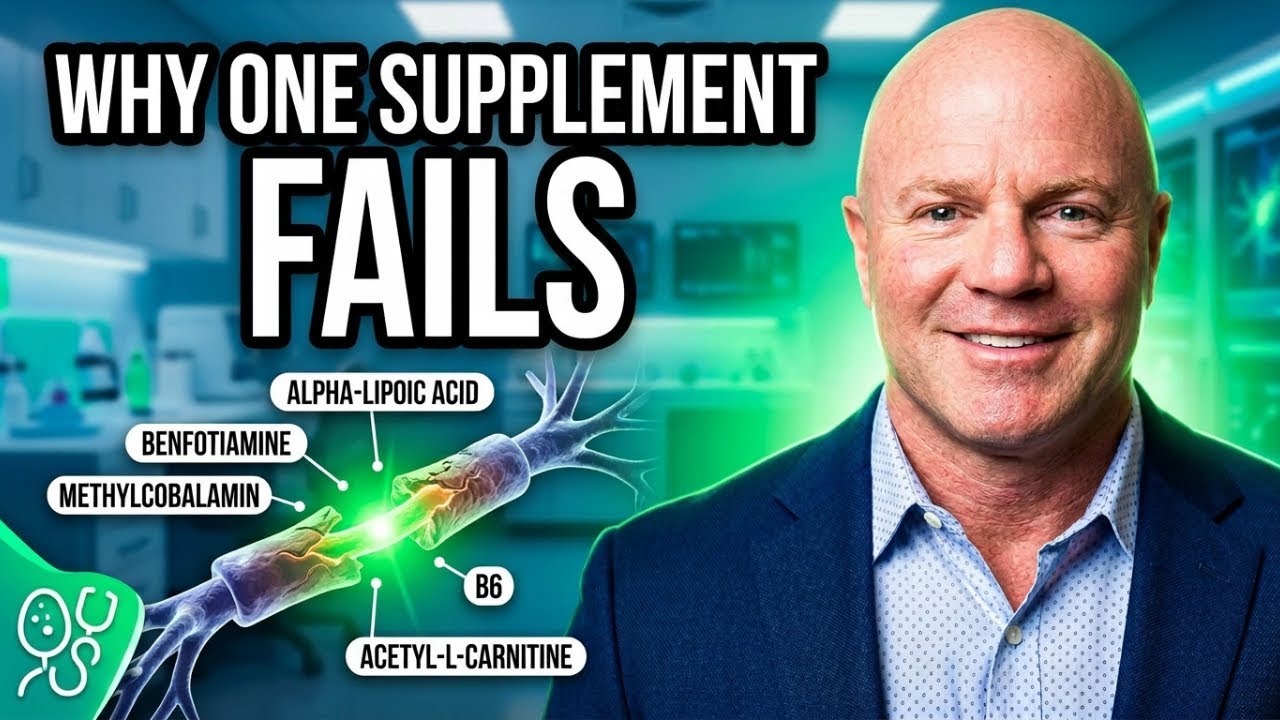
There isn't one vitamin that repairs nerves. There are several nutrients that address distinct, interconnected biological problems — and the scientific evidence suggests the combination is what produces clinically meaningful results.
What You'll Learn
→Why peripheral nerve repair requires multiple biological pathways — not just one vitamin
→The five most evidence-supported nutritional agents in nerve health and what each one actually does
→How B1 (benfotiamine), B6 (pyridoxine), and B12 (methylcobalamin) work together — and why dose and combination matter as much as any individual ingredient
→What alpha-lipoic acid and acetyl-L-carnitine contribute that B vitamins alone cannot
→What to look for in a quality nerve supplement — ingredients, forms, and dosing logic

Peripheral nerves require multiple biological systems operating together. No single nutrient addresses all the pathways involved in nerve repair and maintenance.
Why There Is No Single "Best" Nerve Vitamin
The reason this question — "what is the number one vitamin to heal nerve damage?" — doesn't have a clean answer comes down to the biology. Peripheral nerve degeneration doesn't happen through one mechanism. It happens through several converging pathways simultaneously.
In diabetic neuropathy, the dominant pathways include excess glucose metabolites flooding side-pathways and forming damaging compounds called advanced glycation end products (AGEs), mitochondrial oxidative stress generating excess reactive oxygen species (ROS), reduced blood flow to nerve tissue due to ROS-mediated destruction of nitric oxide, and structural axonal degeneration requiring Schwann cell activity, remyelination, and new axon sprouting to reverse.
In idiopathic neuropathy — where there's no clear metabolic cause — oxidative stress, mitochondrial dysfunction, and neuroinflammation remain the dominant mechanisms. So while the trigger may differ, the downstream biology overlaps substantially.
Insufficient intake of certain vitamins and nutrients — such as B12, magnesium, calcium, and vitamin D — can contribute to neuropathy, and some people develop neuropathy specifically due to these deficiencies. Addressing these nutritional gaps is crucial for supporting healthy nervous system function and preventing further nerve damage.
Each of the five nutritional agents I'm going to walk through addresses a different node in this cascade. That's not a coincidence — it's the scientific rationale for why multi-ingredient approaches consistently outperform single-ingredient ones. A 2025 in vitro study confirmed that the combination of B1, B6, and B12 together promoted superior neurite outgrowth compared to any single vitamin in isolation.
✦ KEY TAKEAWAY
Peripheral nerve damage involves at least five distinct biological mechanisms — metabolic toxicity, oxidative stress, reduced nerve blood flow, structural axonal degeneration, and neurotrophin deficiency. Effective nutritional support addresses multiple targets simultaneously, not just one. Several vitamins and nutrients are essential for repairing nerve damage and maintaining a healthy nervous system.
FREE PHYSICIAN-AUTHORED GUIDE
Want the full framework?
Download the free Nerve Health Blueprint — a physician-authored guide to the 3 pillars of nerve recovery. No fluff, no filler — just the clinical framework I use with my own patients.
Get the Free Blueprint →
The Five Nutritional Agents with the Strongest Evidence
1. Benfotiamine — Fat-Soluble Vitamin B1
Standard thiamine (B1) is water-soluble, which limits how well it penetrates nerve tissue. Benfotiamine is a fat-soluble derivative that achieves dramatically higher intracellular concentrations. In head-to-head comparisons, oral benfotiamine 300 mg raised blood thiamine levels roughly 30 times more effectively than an equivalent thiamine HCl dose.
The mechanism that makes benfotiamine scientifically interesting is its activation of an enzyme called transketolase — the rate-limiting step in the pentose phosphate pathway. This single action diverts glucose metabolites away from three major damage pathways at once: AGE formation, PKC activation, and hexosamine pathway flux. A landmark 2003 study in Nature Medicine described this as the "unifying mechanism" of hyperglycemic damage prevention.
Short-term clinical trials (three to six weeks) have shown statistically significant improvements in neuropathy symptom scores at 300–600 mg/day. Longer-term trials in non-deficient patients have not demonstrated the same benefit, which suggests benfotiamine is most valuable for people with metabolic conditions or suspected thiamine insufficiency — a reasonable baseline assumption for many people with peripheral neuropathy.
NeuroAxis includes 300 mg of benfotiamine per serving — the lower end of the clinically studied range — as part of the broader B-vitamin layer alongside methylcobalamin and B6.
✦ KEY TAKEAWAY — Benfotiamine
Benfotiamine's fat-solubility gives it far superior nerve tissue penetration compared to standard thiamine. Its primary value is redirecting excess glucose metabolites away from three major damage pathways simultaneously — making it especially relevant in metabolic contexts.
2. Vitamin B6 (Pyridoxine) — Neurotransmitter Synthesis & Homocysteine Metabolism
B6 participates in over 100 enzyme reactions in the nervous system — neurotransmitter synthesis (dopamine, serotonin, GABA), homocysteine detoxification, myelin component synthesis, and glucose metabolism. Vitamin B6 is also essential for maintaining the protective sheath around nerves, which is crucial for proper nerve function and helps prevent nerve-related symptoms. B6 deficiency has been documented in approximately 25% of diabetic peripheral neuropathy patients, and low circulating B6 independently correlates with greater symptom severity.
There is an important clinical nuance worth understanding: B6 is one of the few vitamins where both deficiency and excess independently cause peripheral neuropathy. At high doses — typically above 200 mg/day — pyridoxine can produce a length-dependent sensory axonal neuropathy. This is a high-dose toxicity issue, not a concern at the doses used in research-informed formulations. The dose is the critical variable.
NeuroAxis includes 10 mg of pyridoxine — several-fold above the RDA while remaining well below any range associated with concern. At this level, B6 functions as a cofactor support nutrient: completing the homocysteine-handling triad alongside methylcobalamin, supporting the transsulfuration pathway that feeds glutathione production, and providing the enzymatic substrate for neurotransmitter synthesis. The clinical evidence for B6 in neuropathy is strongest in combination — a combination product using 35 mg of B6 alongside methylcobalamin demonstrated statistically significant improvements in neuropathic symptom scores at both 16 and 24 weeks, with greater benefit in patients who had lower baseline B6 levels.
✦ KEY TAKEAWAY — Vitamin B6
B6 is essential for neurotransmitter synthesis, homocysteine clearance, and myelin support — but dose precision matters. The toxicity concern is a high-dose phenomenon (200 mg/day and above). At 10 mg, pyridoxine functions as a well-tolerated cofactor support nutrient, providing meaningful contribution to the homocysteine-handling and neurotransmitter pathways without approaching the ranges associated with excess.

The three neurotropic B vitamins — B1, B6, and B12 — share multiple interlocked metabolic pathways in the peripheral nervous system, with each addressing a distinct node in the repair cascade.
3. Methylcobalamin — Active Vitamin B12
If I had to identify a single "anchor" nutrient for nerve repair, methylcobalamin would be the closest candidate — not because it replaces everything else, but because its role in myelin synthesis is uniquely direct and non-substitutable.
Methylcobalamin is the methyl donor for methionine synthase — the enzyme that converts homocysteine to methionine, generating S-adenosylmethionine (SAM). SAM is the universal methylation substrate for myelin basic protein synthesis. Without adequate methylcobalamin, myelin maintenance is compromised at the biochemical level.
Beyond myelin, methylcobalamin supports Schwann cell differentiation and remyelination, promotes axonal regeneration, boosts BDNF (brain-derived neurotrophic factor) secretion, and modulates neuroinflammation by reducing pro-inflammatory cytokines. It has a dose- and time-dependent proliferative effect on the sensory neurons in the dorsal root ganglia — the cells that detect sensation in the extremities.
Cyanocobalamin — the form in most standard B12 supplements — requires conversion to methylcobalamin before use. That conversion is impaired in older adults, those with kidney disease, and people in the chronic disease states common in neuropathy patients. Methylcobalamin delivers the active form directly. Vitamin B12 deficiency can lead to permanent nerve damage if left untreated, making the form and dose of supplementation clinically important.
Clinical trials using 1,500 mcg/day of oral methylcobalamin have shown significant improvements in neuropathy symptom scores in diabetic polyneuropathy, with evidence of improvement in nerve conduction as well. In a 24-week non-inferiority trial, methylcobalamin at 1,500 mcg/day performed equivalently to acetyl-L-carnitine for both neuropathy symptom reduction and neurological disability scores. NeuroAxis provides 2,000 mcg per serving — modestly above standard trial ranges — to provide a meaningful buffer for passive absorption, particularly relevant for older adults.
✦ KEY TAKEAWAY — Methylcobalamin
Methylcobalamin is the most structurally critical B vitamin for myelin maintenance and axonal regeneration. Its active form bypasses the conversion step that fails in older adults and those with common chronic conditions — making form selection clinically meaningful, not just a marketing distinction.
4. Alpha-Lipoic Acid (ALA) — Mitochondrial Antioxidant
Alpha-lipoic acid may have the most comprehensive mechanism of all the agents reviewed here. It is an endogenously produced compound that serves as a mitochondrial cofactor, a direct free radical scavenger, and a signaling molecule that activates the body's own antioxidant defense systems. ALA may help reduce free radical damage, which contributes to nerve dysfunction and overall nerve health.
What makes ALA distinctive is its amphipathic structure — it can neutralize both water-soluble and lipid-phase free radicals, covering protection across both cell membranes and intracellular fluid. More importantly, it regenerates other antioxidants including glutathione, vitamin C, vitamin E, and CoQ10 — amplifying the entire antioxidant network rather than acting at a single point. It also activates AMPK, which drives mitochondrial biogenesis — not just protecting existing mitochondria but expanding mitochondrial capacity. And it improves endoneurial blood flow by preserving nitric oxide from ROS-mediated destruction.
The clinical evidence is among the strongest in this category. Alpha-lipoic acid is sometimes administered intravenously for more direct and effective delivery, especially in cases of severe nerve damage. Intravenous ALA at 600 mg/day for three weeks carries a Class A recommendation for symptomatic diabetic polyneuropathy based on meta-analyses of four landmark trials (ALADIN I, ALADIN III, SYDNEY, NATHAN II). For oral dosing — the relevant form for supplementation — the SYDNEY 2 trial showed a 51% reduction in the Total Symptom Score with 600 mg/day over five weeks. A 2023 meta-analysis of ten oral ALA trials confirmed significant improvements in composite symptom scores and global patient satisfaction in a dose-dependent pattern.
NeuroAxis uses R-alpha lipoic acid at 600 mg per serving — the natural, endogenously produced enantiomer that is biologically active. This matches the most studied single daily dose in published neuropathy research. Because the formula is taken with food (as directed), any minor differences in fasted vs. fed absorption are managed by the overall formulation strategy.
✦ KEY TAKEAWAY — Alpha-Lipoic Acid
ALA addresses oxidative stress at multiple levels — direct scavenging, antioxidant network regeneration, mitochondrial biogenesis via AMPK, and nerve blood flow via nitric oxide preservation. Oral 600 mg/day is the best-studied dose, with a 51% symptom score reduction observed in the SYDNEY 2 landmark trial.

The SYDNEY 2 trial (2006) found that oral alpha-lipoic acid 600 mg/day produced a 51% reduction in neuropathic symptom scores after five weeks, versus 32% with placebo — one of the most cited oral ALA findings in diabetic neuropathy research.
5. Acetyl-L-Carnitine (ALCAR) — Mitochondrial Energy & Nerve Regeneration
Acetyl-L-carnitine, an amino acid derivative, occupies a unique position in this list because it is one of the few nutritional agents with human biopsy data showing structural peripheral nerve fiber regeneration. In clinical trials, ALCAR treatment produced significant increases in sural nerve fiber numbers and regenerating nerve fiber clusters confirmed by tissue biopsy — this is not symptom data, it is structural evidence of nerve repair.
The mechanisms are multiple. ALCAR transports acetyl groups across the inner mitochondrial membrane, directly fueling the TCA cycle in energy-deprived nerve axons. It upregulates nerve growth factor (NGF) and its receptor TrkA through ERK pathway activation, addressing one of the defining features of established neuropathy — neurotrophin deficiency. And perhaps most intriguingly, it produces analgesia through an epigenetic mechanism: by acetylating a specific transcription factor (NF-κB p65), ALCAR upregulates type-2 metabotropic glutamate receptors in the dorsal root ganglia, which reduces presynaptic glutamate release and dampens pain signaling. This analgesic effect develops over days and persists two or more weeks after discontinuation — a clinically important characteristic. Acetyl-L-carnitine also helps maintain the myelin sheath, which surrounds and protects nerves, enabling them to transmit messages at optimal speed.
ALCAR levels are measurably reduced in diabetic neuropathy, HIV-associated neuropathy, and chemotherapy-induced neuropathy — making supplementation a deficit-correction strategy in addition to a functional intervention. Meta-analyses pooling clinical trial data show a statistically significant reduction in pain scores versus placebo in diabetic peripheral neuropathy subgroups. A 2019 review suggests that acetyl-L-carnitine may help support healthy nerve cells and energy levels, potentially alleviating symptoms of neuropathy.
NeuroAxis includes 600 mg of ALCAR per serving, contributing to mitochondrial energy support alongside R-ALA, CoQ10, and NAC as part of the comprehensive energy stack.
✦ KEY TAKEAWAY — Acetyl-L-Carnitine
Acetyl-L-carnitine is the only agent in this group with biopsy-confirmed structural nerve regeneration in human trials. Its epigenetic analgesic mechanism — upregulating mGlu2 receptors to reduce pain signaling — is unique among nutritional agents and produces effects that persist weeks after discontinuation.
Omega-3 Fatty Acids and Nerve Health
Omega-3 fatty acids are essential nutrients that play a pivotal role in maintaining healthy nerve cells and supporting optimal nerve function. Among these, EPA (eicosapentaenoic acid) and DHA (docosahexaenoic acid) are particularly important for the nervous system. Their well-documented anti-inflammatory effects may help reduce neuropathic pain and inflammation, which are common challenges in peripheral neuropathy and diabetic neuropathy.
Research indicates that omega-3 fatty acids may improve nerve function and help alleviate neuropathy symptoms. One of the key ways omega-3s may support nerve health is by promoting the integrity of the myelin sheath — the protective covering that insulates nerve fibers. Maintaining myelin health is important for proper nerve signaling and regeneration in diabetic peripheral neuropathy.
Dietary sources of omega-3 fatty acids include fatty fish such as salmon, sardines, and mackerel, as well as plant-based options like flaxseeds, chia seeds, and walnuts. When dietary intake is insufficient, omega-3 supplements can be a practical option — though consulting a healthcare professional is always advisable, particularly if you are taking other medications.
The health benefits of omega-3 fatty acids extend beyond nerve health. They are associated with cardiovascular support, reduction in systemic inflammation, and may help support healthy blood sugar levels and insulin sensitivity — factors particularly relevant for people managing diabetes-related neuropathy.
When addressing neuropathy nutritionally, omega-3 fatty acids are often considered alongside other evidence-based agents such as alpha-lipoic acid and acetyl-L-carnitine. Clinical evidence, including randomized controlled trials, suggests that omega-3s may support reductions in neuropathic pain and improved nerve function in individuals with diabetic neuropathy, though further studies are needed to clarify the long-term impact on nerve regeneration.
What to Look for in a Quality Nerve Supplement
The "nerve support supplement" category is crowded and highly variable in quality. Based on the science above, here is what actually differentiates a clinically informed formulation from a marketing-driven product.
Ingredient forms, not just names. The form of B12 matters significantly: cyanocobalamin requires conversion that is often impaired, while methylcobalamin is directly active. For ALA, R-ALA is the endogenously produced enantiomer. For B6, the critical variable is dose — pyridoxine is well-tolerated at research-appropriate amounts (10–50 mg), while high-dose B6 in the hundreds of milligrams is where concerns arise. These are not minor distinctions.
Transparent dosing at meaningful amounts. Proprietary blends hide individual ingredient doses. A quality formulation lists every ingredient with its exact amount per serving — and that amount should be in the range that clinical research has actually studied, not token quantities included for label credibility.
Multi-pathway coverage. Given the mechanistic framework above, a formula that addresses only one or two pathways leaves significant gaps. Myelin support (B12, B6), metabolic protection (benfotiamine), oxidative defense (ALA, NAC), mitochondrial energy (ALCAR, CoQ10), and tissue environment (anti-inflammatory compounds) represent the full biological picture. Vitamins and minerals are essential for nerve health because they help nerves function properly.
Bioavailability consideration. Some active ingredients — particularly curcumin and CoQ10 — have poor oral bioavailability without enhancement. A well-designed formula accounts for this, either through enhanced delivery forms or the inclusion of absorption-enhancing agents like BioPerine®. Declining stomach acid with age can impair absorption of essential nerve nutrients like B12, making bioavailability considerations even more important.
Clinician formulation logic, not trend-following. The nerve supplement market is full of products assembled from ingredient trend lists. The most credible formulas come with documented reasoning for each component and ideally have been studied clinically.
FREE 5-MINUTE QUIZ
Not sure which nerve pathways are driving your symptoms?
Before you change your supplement stack, get a clearer picture. The free Nerve Health Risk Assessment is a 5-minute physician-designed quiz that maps your symptom pattern and risk level — so you know which of the pathways above need the most attention.
Take the 5-Minute Assessment →✦ ABOUT NEUROAXIS
NeuroAxis was developed based on these exact principles. It combines 12 research-referenced ingredients — including all five agents reviewed above, plus NAC, CoQ10, curcumin with BioPerine®, serrapeptase, bromelain, and vitamin D3 — in a formula that originated as NeuroGen®, a supplement I developed for my own surgical patients and studied in peer-reviewed clinical trials before making it publicly available.
Every ingredient is listed with its exact dose. No proprietary blends. Suggested use is three tablets twice daily with food — taking with a meal supports absorption of the fat-soluble components including CoQ10, vitamin D3, and curcumin.
Are Nerve Support Supplements Recommended by Healthcare Professionals?
This depends substantially on the clinician and the patient's specific situation. There is meaningful variability in how physicians approach nutritional support — ranging from active recommendation to skepticism to simply being outside their area of training. Supplements and vitamins are also being studied for their potential to help manage chemotherapy-related neuropathy, with research indicating that certain nutrients may help prevent or alleviate nerve damage caused by chemotherapy.
The evidence base reviewed here — multiple RCTs, several meta-analyses, some with Grade A classifications — is strong enough that the American Diabetes Association guidelines acknowledge alpha-lipoic acid as an option for symptomatic diabetic neuropathy. Methylcobalamin is widely recommended for patients on metformin, which depletes B12 by interfering with ileal absorption. B-vitamin combinations have been studied against gabapentin, with one 2025 RCT finding that the B1-B6-B12 combination produced clinically significant improvements in pain scores with fewer side effects and lower cost. Certain supplements, such as omega-3 fatty acids, B vitamins, and curcumin, may help promote nerve regeneration and provide additional nutritional support for those experiencing nerve damage symptoms.
My own position: these nutritional agents are not a replacement for medical care, metabolic management, or necessary treatment. They are a complement — addressing the nutritional substrate that the body needs to execute its own repair processes. When I was practicing as a nerve surgeon, I recommended targeted nutritional support to surgical patients because I had evidence that it improved recovery outcomes. That evidence is what guided the NeuroAxis formulation.
If you are working with a physician on neuropathy management, these are evidence-based topics worth raising. If you are a patient managing nerve health independently, understanding the mechanism behind each ingredient helps you evaluate options rationally rather than chasing marketing claims.
✦ KEY TAKEAWAY
Nutritional support for nerve health is most effective when it addresses the full biological picture: metabolic protection, oxidative defense, mitochondrial function, structural myelin support, and the tissue environment around nerves. The five agents reviewed here — and the additional compounds in a well-designed multi-ingredient formula — represent this complete picture.
FREE 10-MINUTE CALL
Want a physician to look at your situation directly?
Book a free 10-minute call. We'll talk through your symptoms, current stack, medications, and what makes sense for your specific situation. No pressure — we'll know in 10 minutes whether I can help.
Book Your Free 10-Min Call →A Practical Action Plan for Nerve Nutritional Support

Building a consistent nutritional foundation for nerve health is a layered process — starting with what you do today and building toward long-term metabolic habits.
TIERED ACTION PLAN — NERVE NUTRITIONAL SUPPORT
TODAY
• Audit your current supplement stack — check forms and doses, not just names. Is your B12 methylcobalamin or cyanocobalamin? What is the milligram amount of any B6 you are taking?
• If you are on metformin, prioritize methylcobalamin supplementation — metformin depletes B12 via ileal receptor inhibition, and this is well-documented.
THIS WEEK
• Evaluate your dietary fat intake at meals — fat-soluble nutrients like CoQ10, vitamin D3, and curcumin require dietary fat for absorption. Taking supplements with a fat-containing meal improves bioavailability meaningfully.
• If you are not currently addressing oxidative stress through nutrition, consider that this pathway is active in both diabetic and idiopathic neuropathy — not just one type.
• Evaluate your vitamin D status — vitamin D deficiency is common among those with nerve health issues, including diabetic neuropathy, and may contribute to neuroinflammation.
• Ensure adequate magnesium intake — magnesium is critical in glucose metabolism and maintaining healthy insulin sensitivity, and low magnesium levels are correlated with oxidative stress.
THIS MONTH
• Consider lab evaluation: serum B12, methylmalonic acid, and homocysteine together give a more accurate picture of functional B12 status than B12 alone. Elevated homocysteine is associated with a 3.48× higher odds of neuropathy in epidemiologic data.
• Review any medications that deplete key nutrients: metformin (B12), statins (CoQ10), proton pump inhibitors (B12 and magnesium), and loop diuretics (thiamine) are the most commonly relevant.
LONG TERM
• Consistency is the critical variable. Nerve repair is measured in months, not days. The ALCAR biopsy data showing structural nerve regeneration came from six- to twelve-month follow-ups. Benefits from methylcobalamin accumulate over time and are driven by sustained availability.
• Integrate nutritional support within the broader metabolic picture: blood sugar management, cardiovascular health, sleep, and movement each influence the same pathways that these nutrients address. Supplementation works best in a well-managed overall environment.
DIETARY & SUPPLEMENT NOTES
• Include low-fat dairy products as a dietary source of B vitamins to support nerve and metabolic health.
• Consider fish oil supplementation — fish oil is rich in omega-3 fatty acids and has been associated with reduced neuropathic pain and anti-inflammatory effects in research settings.
Frequently Asked Questions
What are the vitamins most associated with nerve repair?
The five nutritional agents with the most direct mechanistic and clinical relevance to peripheral nerve repair are benfotiamine (fat-soluble B1), pyridoxine (B6), methylcobalamin (active B12), alpha-lipoic acid (ALA), and acetyl-L-carnitine (ALCAR). Each addresses a different biological pathway involved in nerve degeneration and recovery. N-acetylcysteine (NAC), both an antioxidant and amino acid, also supports nerve health by reducing oxidative stress and inflammation. The research consistently shows that combinations outperform individual agents.
What is the difference between methylcobalamin and cyanocobalamin B12?
Cyanocobalamin is the most common and least expensive form, requiring intracellular conversion to methylcobalamin before the body can use it. In older adults and people with common chronic conditions — including kidney disease, advanced age, and certain metabolic disorders — this conversion step is impaired. Methylcobalamin delivers the biologically active form directly, achieving higher concentrations in nerve tissue. The published clinical trial evidence in peripheral neuropathy is built primarily on methylcobalamin, not cyanocobalamin.
Can you get too much B6?
Yes — at high doses. This is an important clinical point that is often poorly communicated: B6 toxicity is a high-dose phenomenon, typically documented at sustained intake above 200 mg/day. At that level, pyridoxine can cause a sensory axonal neuropathy — the same condition it is often taken to support. At the doses used in research-informed formulations — 10 to 50 mg/day — pyridoxine is well-tolerated and there is no documented toxicity concern. The key takeaway is to look at the actual milligram amount on any B6 supplement label. Doses in the tens of milligrams are appropriate; doses in the hundreds warrant a conversation with your physician.
How long does it take for nerve supplements to work?
This varies meaningfully by agent and by outcome measured. Symptom improvements with oral ALA have been detected as early as one to two weeks in clinical trials. ALCAR's epigenetic analgesic mechanism develops over days but persists weeks after stopping — longer courses produce more durable benefit. Structural nerve regeneration data from biopsy studies show measurable changes at six to twelve months. In general, nerve health nutrients are cumulative — they build effectiveness over time — and the clinical research reflects this: most meaningful trial results come from eight weeks or longer of consistent use.
Are nerve supplements recommended by doctors?
Physician practice varies. The evidence base for alpha-lipoic acid in diabetic neuropathy is recognized in major guidelines. Methylcobalamin supplementation for patients on metformin is widely recommended given the well-documented B12 depletion mechanism. More broadly, the clinical trial data summarized here is strong enough to warrant an informed conversation with any physician managing neuropathy. These agents are nutritional support, not treatment — they complement medical care rather than replacing it.
What should I look for on a nerve supplement label?
Start with ingredient forms: methylcobalamin (not cyanocobalamin) for B12, and R-alpha lipoic acid rather than generic racemic ALA. For B6, look at the dose — 10 to 50 mg is a research-appropriate range; anything in the hundreds of milligrams is worth questioning. Confirm individual dosing is transparent — no proprietary blends. Check that amounts fall in the ranges studied clinically. Look for multi-pathway coverage rather than a single-focus formula. And consider whether a bioavailability enhancer like BioPerine® is present to improve absorption of fat-soluble compounds like curcumin and CoQ10.
The Bottom Line
The search for "the best vitamin for nerve damage" reflects a genuine need — people are looking for concrete, actionable nutritional guidance. The honest answer from the evidence is that there isn't one best vitamin, but there is a best framework: address the multiple pathways involved in peripheral nerve degeneration with agents that have mechanistic logic and clinical evidence behind them.
Benfotiamine addresses the metabolic toxicity cascade. Vitamin B6 addresses neurotransmitter synthesis, homocysteine handling, and myelin components — at a dose where it functions as a well-tolerated cofactor, not a pharmacological intervention. Methylcobalamin addresses myelin synthesis, Schwann cell function, and axonal regeneration at their biochemical roots. Alpha-lipoic acid addresses oxidative stress across multiple levels while also improving nerve blood flow and mitochondrial capacity. Acetyl-L-carnitine addresses mitochondrial energy, NGF expression, and structural nerve repair with biopsy-confirmed results.
Together, they represent the current best evidence for nutritional support of peripheral nerve health. Used consistently, at appropriate doses, in active forms, and alongside sound metabolic management — that combination is what the science supports.
Ready to Take the Next Step?
You've seen the mechanism behind every ingredient. Here are four ways to act on it.
Not sure where to start? The free 10-min call is the fastest way to get a clear next step.
More from Dr. Fitz: Articles
About the Author
Michael Fitzmaurice, M.D.
Peripheral Nerve Surgeon · Metabolic Health Educator · Exercise Physiologist
Dr. Fitzmaurice is a fellowship-trained peripheral nerve surgeon with a background in nerve physiology, metabolic health, and applied exercise physiology. Through years of surgical practice, he has observed the close relationship between metabolic health, cellular energy production, and nervous system function. His work focuses on how physical activity, recovery biology, and nutrition-informed strategies relate to long-term nerve and metabolic health.
He oversees Dr. Fitz Nutrition, an education-first initiative translating evidence-informed research into thoughtfully designed formulations for nerve and metabolic health — and believes that patients who understand the science make better decisions about their care.
This content is for educational purposes only and is not intended to diagnose, treat, cure, or prevent any disease. Individual results vary. Always consult a qualified healthcare provider regarding your individual medical situation.